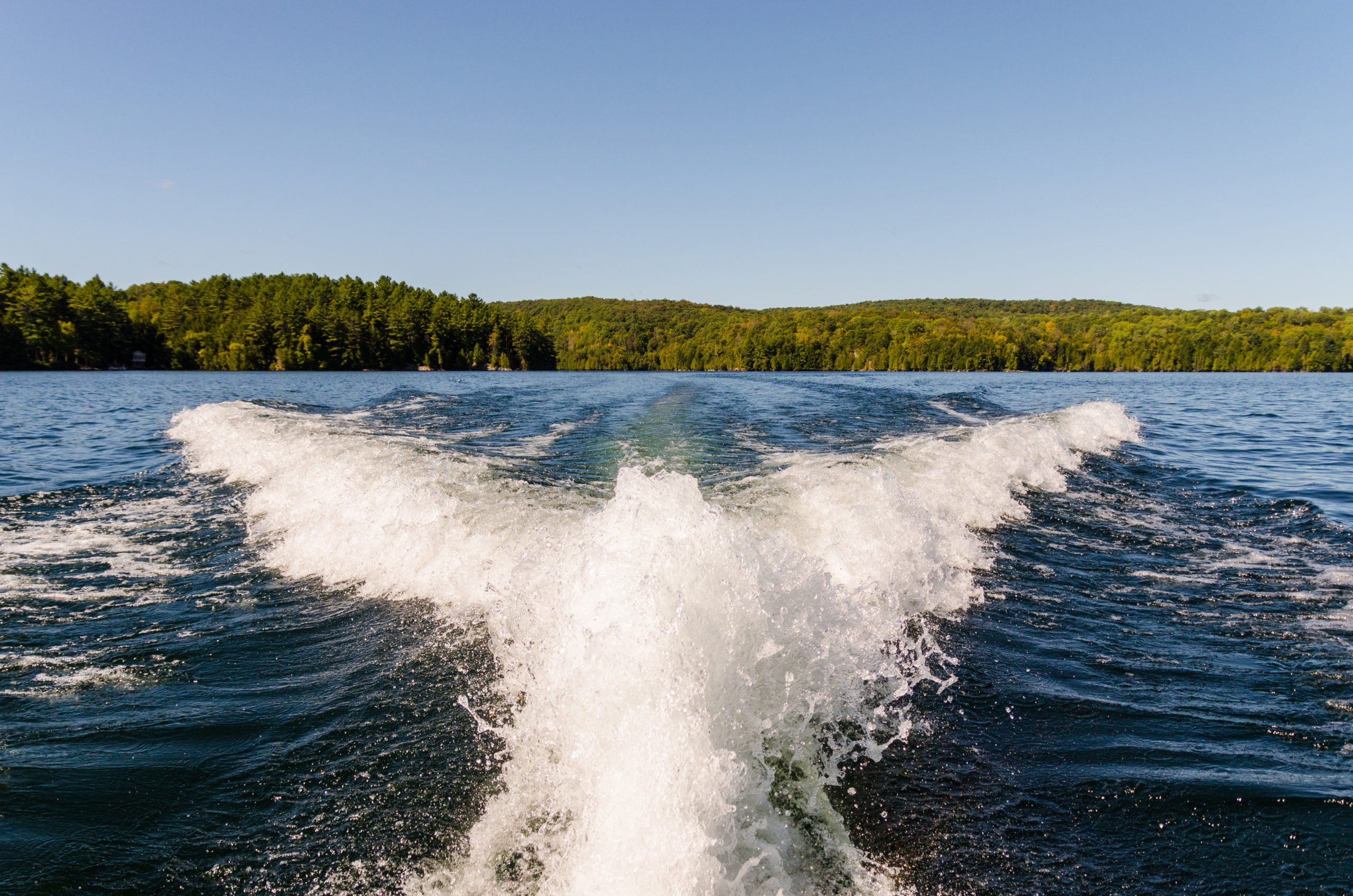
The wave energy a boat throws off doesn't disappear — it breaks on someone's shoreline. Repeated wakes wash away shoreline soils, undercut banks and docks, muddy the water with sediment that smothers fish spawning habitat, and swamp the nests of loons, which sit just at the waterline and are most vulnerable from May through July.
Explore our new Watch Your Wake guide for lake-specific wake zones, interactive maps, Ontario rules and practical guidance for safer boating.
The rule of thumb: slow down near shore
In Ontario, federal boating rules restrict powerboats to 10 km/h or less within 30 metres of shore on most inland waters — but on our lakes, with their bays, narrows and islands, being a good neighbour means going further: treat any water near a shoreline, dock, swimmer or paddler as a slow zone, and save full speed for open water.
Be #WakeAware
FOCA, together with the Muskoka Lakes Association and Safe Quiet Lakes, runs the Be #WakeAware campaign. The key practices:
- Stay well offshore when creating a wake. For wake-enhanced activities like wake surfing, the campaign recommends keeping at least 300 metres from shore, in deep water — large wakes in shallow water also churn up the lake bottom.
- Watch your trim. A bow-high boat plowing at mid-speed makes the biggest wake of all. Get on plane quickly or slow right down.
- Respect paddlers, swimmers and anglers — your wake reaches them long after you've passed.
- Repeat passes multiply the damage. Vary your route rather than carving the same shoreline all afternoon.
Why it matters here
Our shorelines are the engine of the lake: the first 10–15 metres of natural bank and vegetation filter runoff, hold soil in place, and shelter the insects, minnows and nesting birds the whole food chain depends on. Erosion from wakes undoes that work — and once a bank starts to fail, it gets expensive for the property owner and muddy for everyone. Pair good wake habits with a naturalized shoreline for the best protection.